The Common Fund for Commodities and the ACT Fund at the SASI Learning & Scaling Labs: Scaling Sustainable Agriculture Through Partnership and Finance
On 6 May 2026, the Common Fund for Commodities (CFC) participated in the SASI Learning & Scaling Labs Kick-Off Event in Bonn, Germany. The event brought together a diverse group of stakeholders: private sector actors, technical organizations, donors, researchers, and implementing partners, all working toward a shared ambition of accelerating sustainable transformation across global agricultural value chains.
Organized under the Sustainable Agricultural Supply Chains Initiative (SASI), a GIZ-led initiative implemented on behalf of the German Federal Ministry for Economic Cooperation and Development (BMZ), the SASI Labs were designed to address a central question: how can promising sustainability pilots move beyond isolated success stories and achieve scalable, lasting impact? SASI pursues this by fostering partnerships, supporting innovation, and encouraging collaboration across public and private sector actors, civil society organizations, and research institutions.
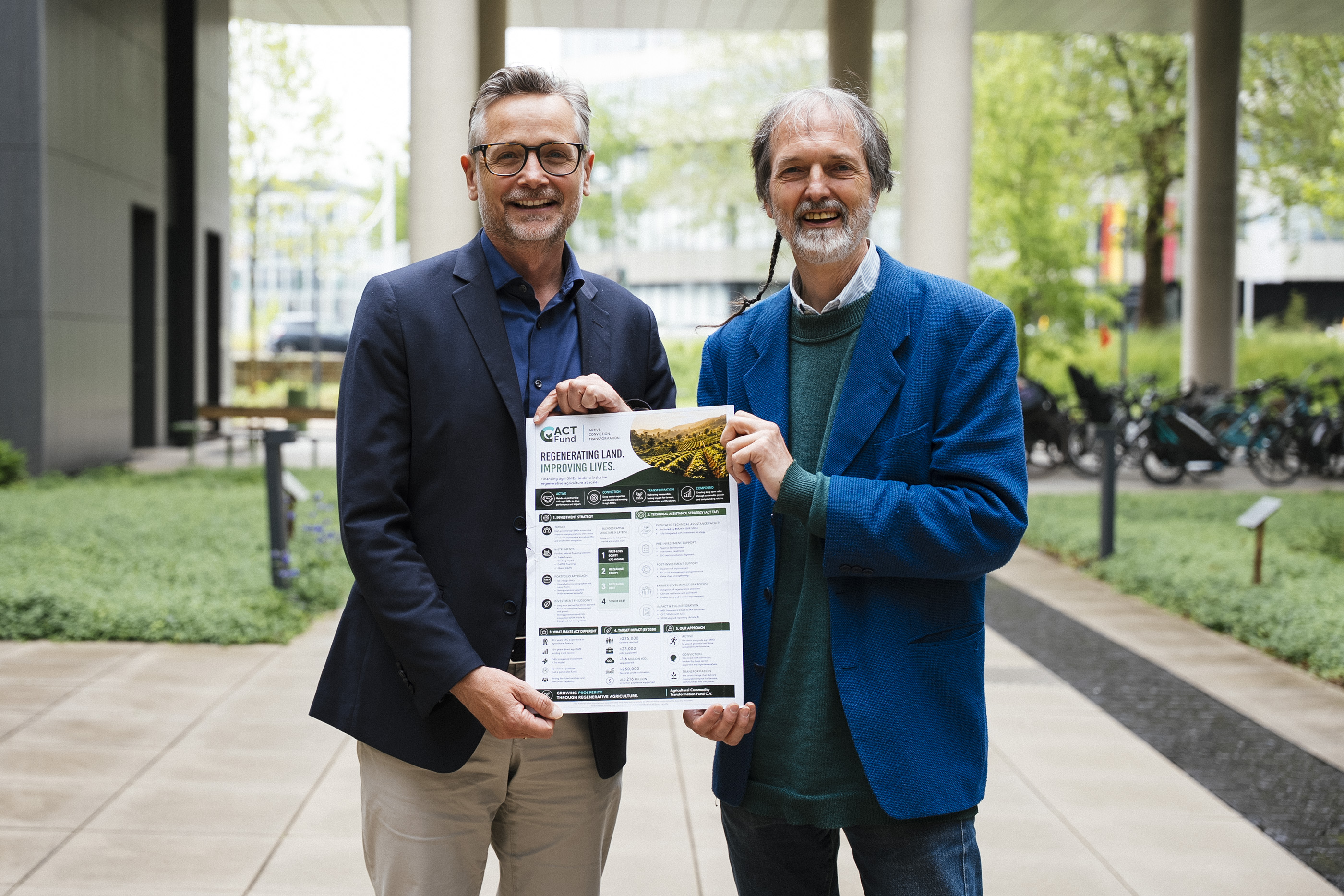
Representing the CFC, Michael van den Berg as Fund Director of the ACT Fund joined the opening moderated dialogue on scaling partnerships and financing mechanisms. The discussions reinforced a growing recognition that scaling sustainable agriculture requires more than financing alone. It also depends on strong partnerships, tailored technical support, and locally grounded implementation models. As Michael noted: “The conversation kept coming back to the same point: money moves, but transformation requires partnerships. That is what we are trying to put into practice with the ACT Fund”.
This framing sits at the heart of the ACT Fund. Agricultural systems are increasingly under pressure from climate shocks, soil degradation, biodiversity loss, and evolving sustainability requirements. These challenges hit the most vulnerable actors hardest, particularly smallholder farmers and rural communities, who often have the least resources to adapt despite being the most exposed. The ACT Fund responds to this by supporting commercially viable agri-SMEs operating at the intersection of smallholder livelihoods, climate resilience, and biodiversity, with the goal of strengthening both sustainability and long-term economic resilience across agricultural value chains.
Complementing the Fund, the ACT Technical Assistance Facility (ACT TAF) provides tailored support to investee companies and their smallholder networks. A key part of what makes the ACT TA Facility work in practice is its demand-driven approach: rather than prescribing solutions, ACT TA Facility responds to the actual needs and requests of the agri-SMEs it works with, supporting them on their own terms. This might involve regenerative, climate-smart or organic agricultural practices, farmer support systems, traceability and data systems, or more inclusive operational models, but always in response to what companies themselves identify as priorities. Companies also contribute to the cost of this support, which in practice reinforces the equal partnership model: assistance is requested, not imposed, and jointly invested in.
Many of the themes that emerged from the SASI Learning & Scaling Labs, around blended finance, ecosystem collaboration, and the conditions needed for scaling, reflected this same philosophy. The event reinforced that the shift from fragmented pilots to lasting systemic change depends on trust, local knowledge, and partnerships built on equal footing.
For the CFC and the ACT TAF, the Bonn event was a useful reminder of how much can be achieved when the right actors are in the room together. As we continue to grow the ACT Fund and expand the reach of the ACT TAF, currently supported by the German Federal Ministry for the Environment, Climate Action, Nature Conservation and Nuclear Safety (BMKUN), we are actively looking to deepen our partnership base. That includes organizations with local expertise in climate resilience, biodiversity, or farmer support; knowledge partners working on sustainability standards or data systems; businesses that could benefit from demand-driven technical assistance; and donors or coinvestors who share our commitment to inclusive and regenerative agricultural systems. If any of this resonates, we would be glad to hear from you.
Further Information
For further information about the ACT Fund, please contact: