ACT Fund Signs USD 2 Million Loan Agreement with COCAFCAL, financing regenerative agriculture in the Latin American coffee sector
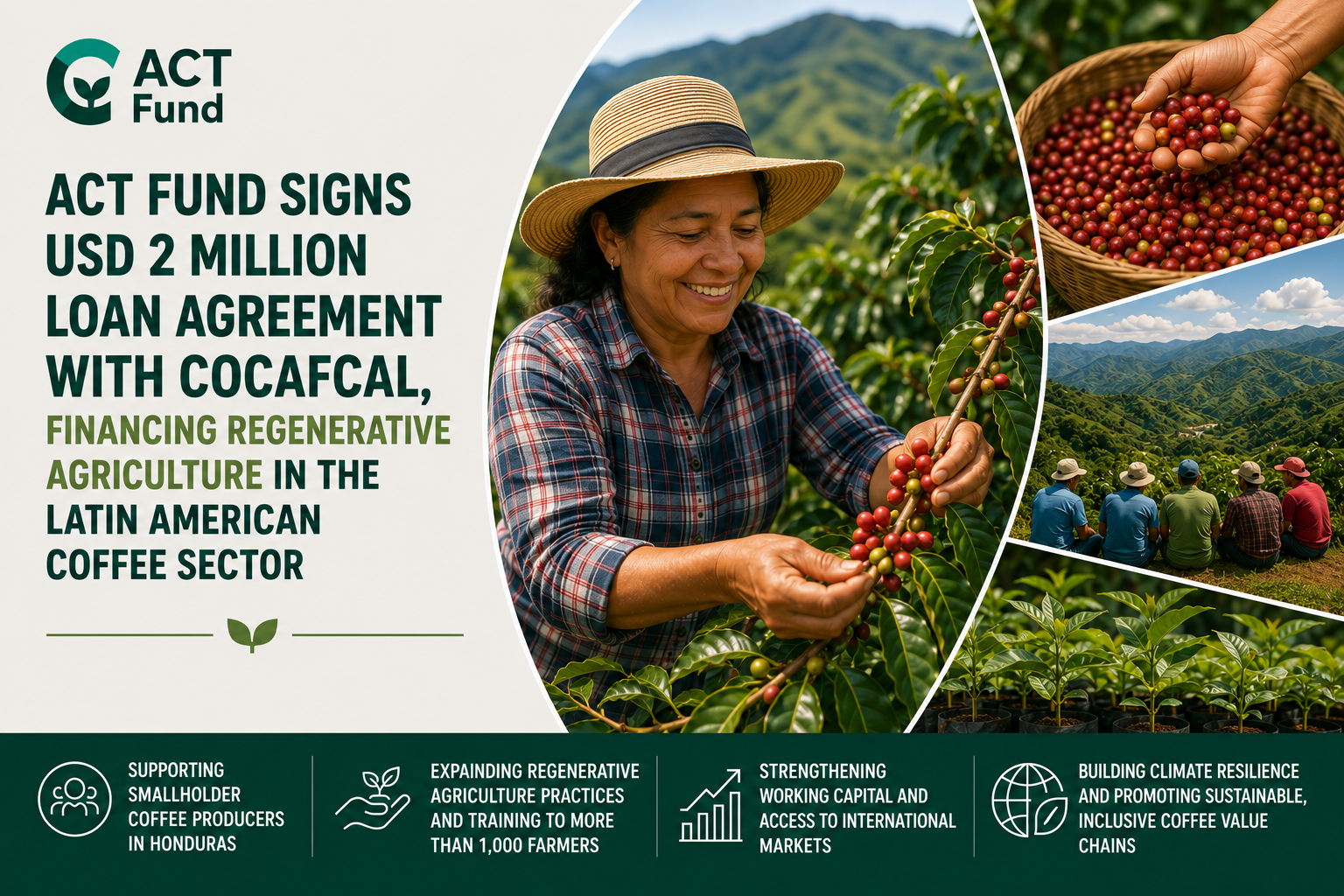
Amsterdam, 7 July 2026 - Building on a successful partnership between the Common Fund for Commodities (CFC) and one of Honduras' leading coffee cooperatives, Cooperativa Cafetalera Capucas Limitada (COCAFCAL), the Agricultural Commodity Transformation (ACT) Fund has signed a USD 2 million trade finance loan agreement to advance regenerative agriculture and strengthen smallholder livelihoods in the Latin American coffee sector. The financing will strengthen the cooperative's working capital, enabling it to purchase coffee from its members, meet growing international demand for sustainably certified coffee, and continue investing in sustainable farming practices that benefit both farmers and the environment. In addition to the financing, the ACT Technical Assistance Facility will support in strengthening the carbon sequestration and climate resilience of smallholders.
The agreement marks the ACT Fund's first financing agreement in Latin America and an important milestone in the Fund's strategy to expand catalytic investment across developing regions.
Established in 1999, COCAFCAL is a farmer-owned coffee cooperative representing 989 smallholder coffee producers across western Honduras as of 2025. Over the past 25 years, it has grown into one of the country's leading exporters of specialty Arabica coffee, managing the entire value chain from farmer training and certification to processing, quality control and exports. In 2025, the cooperative processed nearly 4,822 metric tonnes of coffee and generated approximately USD 41 million in revenue, supplying sustainably certified coffee to buyers across Europe and North America.
Sustainability is embedded throughout COCAFCAL' operations. Around 90 per cent of its members produce coffee under internationally recognised sustainability standards, including Organic, Fairtrade and Regenerative Organic Certification (ROC). Farmers receive ongoing technical assistance to adopt practices such as agroforestry, intercropping, mulching, cover cropping, reduced tillage and the use of organic bio-fertilisers produced from recycled coffee waste. The cooperative also generates energy from coffee by-products, demonstrating how circular economy approaches can create environmental and commercial value simultaneously.
The financing will enable COCAFCAL to expand purchases from its members during the harvest season while strengthening exports of sustainably certified coffee. The partnership aims to increase the number of participating farmers, expand regenerative agriculture training to more than 1,000 farmers, and increase the area under Regenerative Organic Certification, further improving climate resilience and sustainable land management. Under the signed agreement, the facility may be disbursed in one or more tranches following satisfaction of the agreed conditions precedent.
Beyond coffee production, COCAFCAL has developed several initiatives that strengthen rural livelihoods and community resilience. These include honey production and tilapia farming to diversify household incomes, alongside Flor de Campo, a women-led enterprise owned by female coffee producers that promotes women's economic participation in the coffee sector.
Ernesto Daza Lacouture, Investment Manager at the ACT Fund, said:
"Our investment in COCAFCAL marks an important milestone for the ACT Fund and our first investment in Latin America. COCAFCAL demonstrates that commercial success can go hand in hand with regenerative agriculture, circular economy practices, and meaningful benefits for smallholder farmers. We are proud to support a cooperative that is strengthening sustainable coffee production while creating lasting economic opportunities. We see this as the first of many investments that will accelerate regenerative agricultural transformation across Latin America."
The agreement builds on an established partnership between COCAFCAL and the Common Fund for Commodities (CFC), reflecting the confidence developed through previous collaboration. By supporting The Cooperative next stage of growth through the Agricultural Commodity Transformation (ACT) Fund, CFC continues its mission of mobilising catalytic finance for agricultural enterprises that strengthen smallholder livelihoods while promoting resilient and sustainable commodity value chains.
José Omar Rodríguez, General Manager of Cooperativa Cafetalera Capucas Limitada (COCAFCAL), said:
"For 27 years, COCAFCAL has been committed to producing specialty coffee while creating social, economic, and environmental value for more than 900 coffee-producing families across Honduras. Access to finance remains one of the biggest challenges for producer cooperatives, and we are grateful to the ACT Fund for its confidence in our vision. This investment will strengthen our working capital, expand our access to international markets, and enable us to provide greater support to our members while advancing a more resilient and sustainable coffee value chain."
The agreement with COCAFCAL demonstrates the ACT Fund's investment approach: supporting commercially robust agricultural enterprises that strengthen rural economies while delivering measurable environmental and social outcomes. It also reflects the Common Fund for Commodities' long-term commitment to building partnerships that expand access to finance for producer organisations and agricultural SMEs.
As the ACT Fund continues to grow its portfolio across Africa, Asia and Latin America, it remains committed to mobilising catalytic capital that strengthens resilient commodity value chains and creates lasting opportunities for smallholder farmers.