Bangladesh and CFC Champion a New Global Agenda for Human-Centred Commodity Development
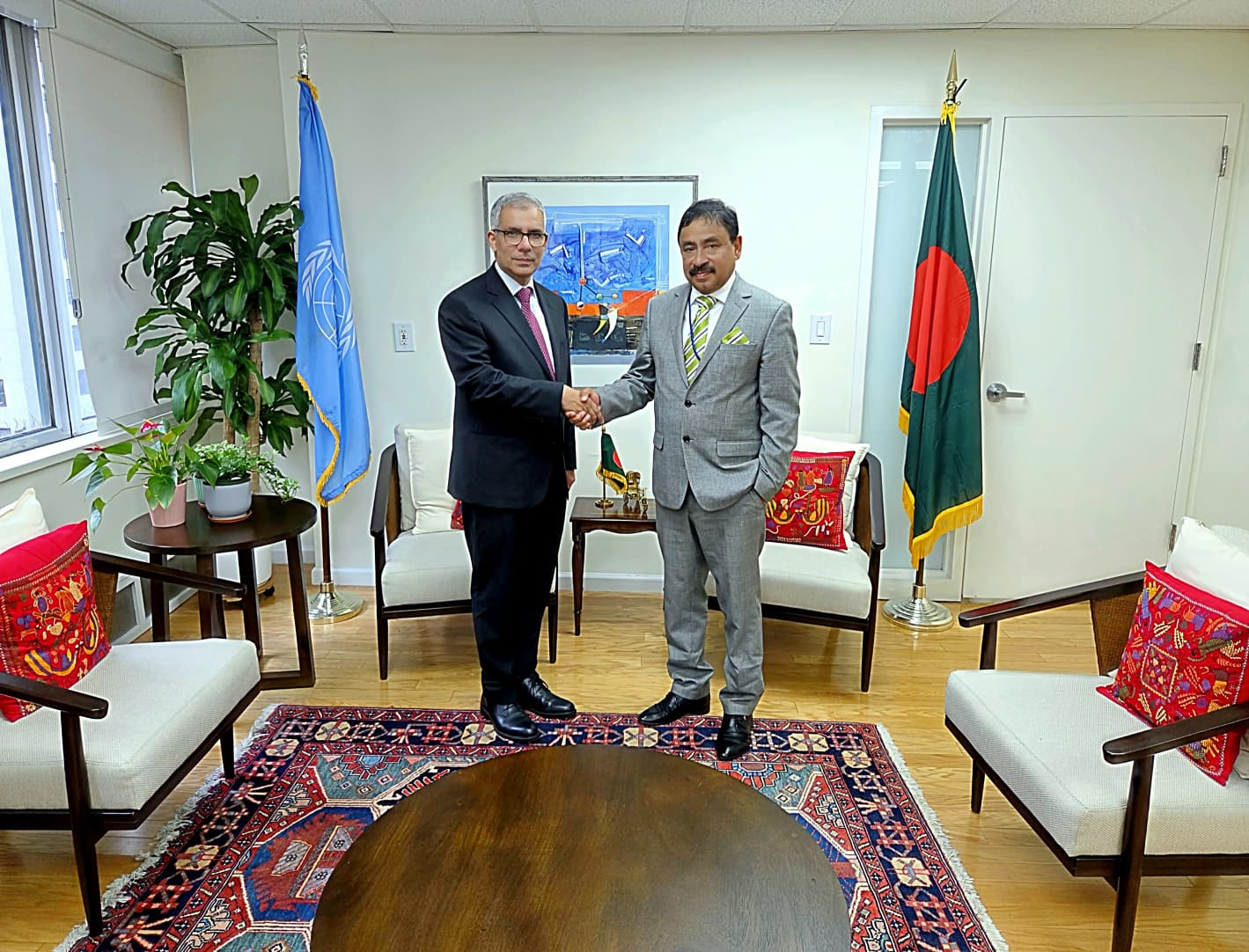
New York, 22 July 2026 — H.E. Mr. Sheikh Mohammed Belal, Managing Director of the Common Fund for Commodities (CFC), met with H.E. Mr. Salahuddin Noman Chowdhury, Permanent Representative of Bangladesh to the United Nations and incoming Vice-President of the United Nations Economic and Social Council (ECOSOC), on the margins of the Financing for Development Forum in New York.
Ambassador Belal introduced the work of the Common Fund for Commodities, highlighting the organization's unique mandate to finance agricultural small and medium-sized enterprises (SMEs), strengthen commodity value chains, and improve the livelihoods of smallholder farmers in developing countries. He noted that although developing countries produce many of the world's essential commodities, millions of farming families continue to receive only a small fraction of the final value of the products they help create.
He referred to the impact of CFC-supported initiatives in Bangladesh, where women who previously depended on informal brick-making activities have acquired new skills and transitioned into more sustainable livelihoods through handicraft production. By connecting local producers with international markets, including access to European buyers, the initiative demonstrates how value chain transformation can create dignified employment, preserve traditional skills and enable communities to capture greater economic value from their work.
"Too often, those who work the hardest receive the least. Humanizing the value chains means ensuring that development begins with the people at the very start of the supply chain—the smallholder farmers, workers, cooperatives and rural communities whose livelihoods depend on fair and sustainable markets. Development should not only be measured by trade volumes, but by whether it improves lives," Ambassador Belal said.
The Managing Director also presented the CFC's Humanizing the Value Chains (HVC) initiative, which seeks to place people at the centre of international trade by promoting fairer value distribution, greater transparency, responsible sourcing, local value addition and stronger support for producer organizations, cooperatives and agricultural SMEs.
Recognizing Bangladesh's longstanding leadership within the developing world and its unwavering advocacy for the interests of the Least Developed Countries (LDCs) and other vulnerable economies, as well as H.E. Mr. Chowdhury's forthcoming responsibilities as Vice-President of ECOSOC, Ambassador Belal expressed his hope for closer engagement in advancing commodity transformation within the broader Financing for Development agenda.
He noted that Bangladesh is a natural partner for the CFC's work. Nearly three-quarters of the world's LDCs remain heavily dependent on commodities, while many commodity-dependent developing countries continue to export more than 60 per cent of their commodities in raw or minimally processed form, foregoing opportunities for industrialization, job creation and sustainable economic transformation.
Ambassador Belal further observed that Bangladesh's own remarkable development journey—from one of the world's poorest countries to a globally competitive manufacturing economy, particularly in the ready-made garments sector, while benefiting from one of the world's largest expatriate workforces—offers valuable lessons for many commodity-dependent developing countries seeking to diversify their economies and move up global value chains.
"Bangladesh has consistently championed the aspirations of developing countries and the Least Developed Countries within the United Nations. We consider Bangladesh a natural ally in advancing a more people-centred approach to commodity development. As ECOSOC assumes a leading role in implementing the Sevilla Commitment, we look forward to working closely with Bangladesh to ensure that commodity transformation, value addition and stronger support for smallholder farmers and SMEs become integral elements of the global development agenda," Ambassador Belal said.
H.E. Mr. Chowdhury welcomed the CFC's people-centred approach to development and recognized the importance of ensuring that the benefits of global trade are shared more equitably across commodity value chains.
"The prosperity of global markets should also be reflected in the prosperity of those who produce the world's commodities. Strengthening value addition, improving market access and creating opportunities for smallholder farmers, workers and rural enterprises are essential for achieving inclusive and sustainable development. The work of the Common Fund for Commodities represents an important contribution to this agenda, and Bangladesh looks forward to continued engagement in these important discussions," H.E. Mr. Chowdhury said.
The two sides also exchanged views on the implementation of the Sevilla Commitment, particularly its call for enhanced international support to commodity-dependent developing countries. They agreed that commodities should occupy a more prominent place within the Financing for Development agenda, recognizing that sustainable transformation of commodity sectors is essential for achieving the Sustainable Development Goals. Ambassador Belal underscored that financing agricultural SMEs—the "missing middle"—is indispensable for creating jobs, strengthening food security and enabling producing countries to capture a greater share of the value generated from their natural resources.
Both sides agreed that closer cooperation between the CFC and the United Nations system can help elevate commodity transformation as a central pillar of sustainable development. They reaffirmed their shared commitment to ensuring that financing for development reaches rural communities, supports agricultural innovation, promotes local value addition and enables commodity-producing countries to retain a greater share of the wealth generated from their commodities.
About the Common Fund for Commodities (CFC)
The Common Fund for Commodities (CFC) is a UN-affiliated international financial institution dedicated to alleviating poverty and fostering inclusive and sustainable development in commodity-dependent developing countries. Through innovative financing, blended finance and technical assistance, the CFC supports smallholder farmers, cooperatives and SMEs to strengthen commodity value chains, promote local value addition and improve livelihoods while advancing the Sustainable Development Goals.
For media inquiries, please contact:
CFC Media Relations Team
Email: managing.director@common-fund.org