CFC Meets Syria’s Permanent Representative to the OPCW to Discuss Commodity-Based Development and SME Support
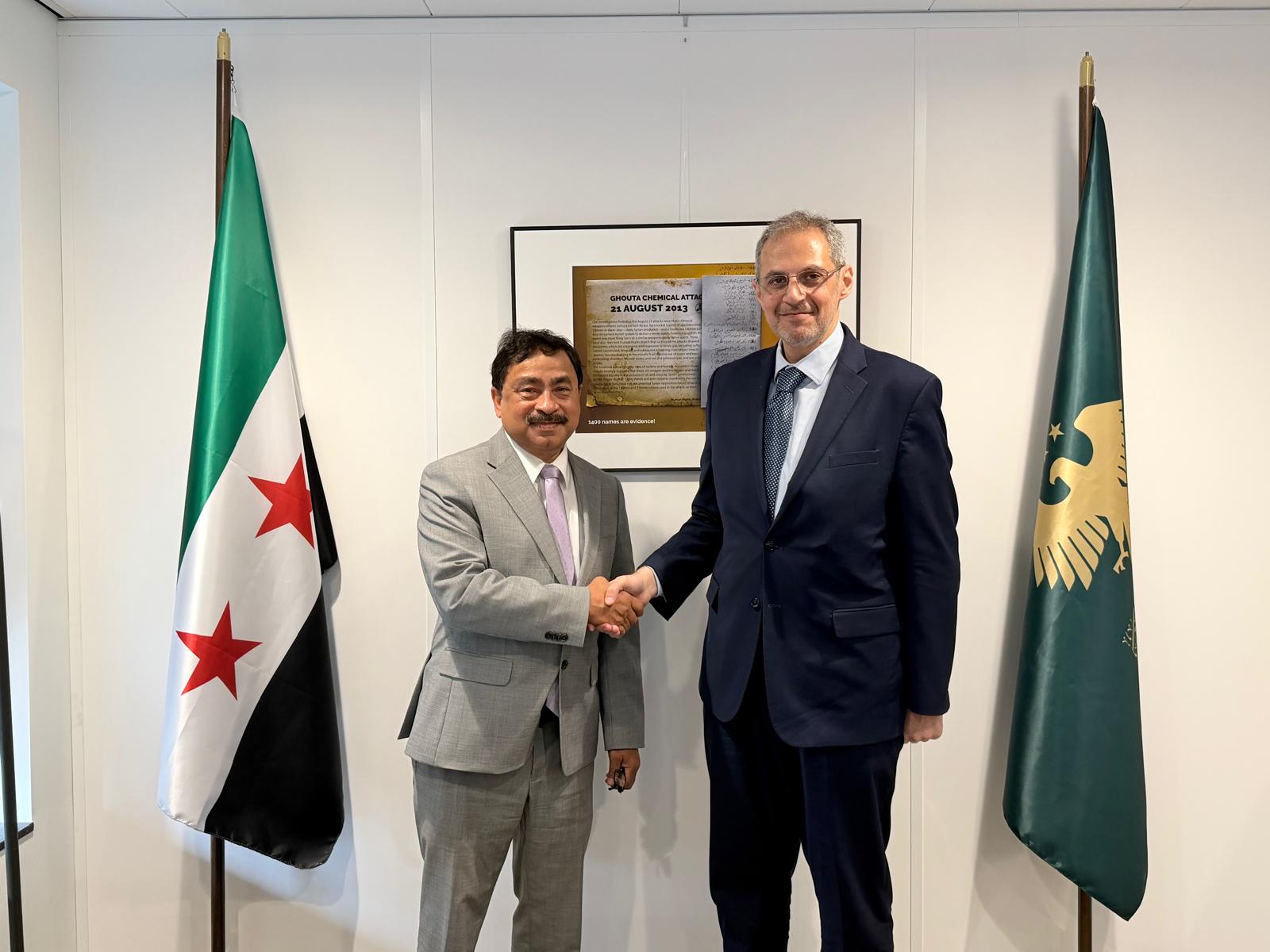
The Hague, 28 October 2026 - The Managing Director of the Common Fund for Commodities (CFC), H.E. Amb. Sheikh Mohammed Belal, met with H.E. Dr. Mohamad Katoub, Permanent Representative of the Syrian Arab Republic to the Organisation for the Prohibition of Chemical Weapons (OPCW), to exchange views on the potential of commodity-based development to support livelihoods, strengthen small and medium-sized enterprises (SMEs) and contribute to agricultural recovery and food security in Syria.
The discussion highlighted the importance of placing people at the centre of development by creating opportunities for producers, local businesses and rural communities to participate more effectively in commodity value chains. For the CFC, this means looking beyond raw commodity production to the enterprises, workers and smallholder farmers whose livelihoods depend on these sectors and helping them capture greater value from their activities.
Supporting agricultural recovery through local value chains
The meeting touched on a CFC-approved project in Syria that aims to support the rehabilitation of agricultural land through demining, enabling land to be used for horticultural production. Once operational, the project is expected to contribute to restoring productive agricultural capacity, supporting local livelihoods and improving the foundations for food security.
The initiative reflects the links between agricultural recovery and broader economic development. Making land safe for cultivation can create opportunities for farmers and local enterprises to resume productive activities, reconnect with markets and contribute to the availability of agricultural products. As the project has been approved but is not yet operational, its intended contribution will depend on implementation and the successful return of land to productive use.
Putting SMEs and people at the centre of commodity value chains
The exchange also explored the CFC’s approach to commodity-based development, with particular attention to SMEs and the role they play in connecting producers to markets. In many commodity-dependent economies, local enterprises face barriers to finance, technology, processing capacity and market access. Addressing these constraints can help businesses grow while creating jobs and expanding economic opportunities for the communities around them.
Through investment and technical assistance, the CFC seeks to strengthen these enterprises and support more inclusive and commercially viable high-value commodity value chains. This includes opportunities to move beyond the export of raw materials towards local processing, improved product quality and greater value addition in producing countries.
The CFC’s approach recognises that commodities are more than traded goods: they underpin livelihoods, local economies and opportunities for future generations. By supporting the businesses and people who work across these value chains, the Fund aims to help ensure that a greater share of the economic benefits remains closer to the point of production.
Exploring opportunities for commodity-based development
The meeting provided an opportunity to exchange perspectives on how a strategic focus on commodity value chains could support Syria’s agricultural recovery and longer-term economic development. Strengthening SMEs, rebuilding productive capacity and improving connections between producers and markets can contribute to more resilient local economies.
For the CFC, these priorities are central to its commitment to humanising commodity value chains—placing people, livelihoods and local enterprise at the heart of development. Through engagement with Member States and partners, the Fund continues to explore opportunities to support commercially viable commodity-based businesses that generate lasting economic and social benefits.