Global Hunger Declines, but Agrifood Value Chains Still Leave Too Many Behind
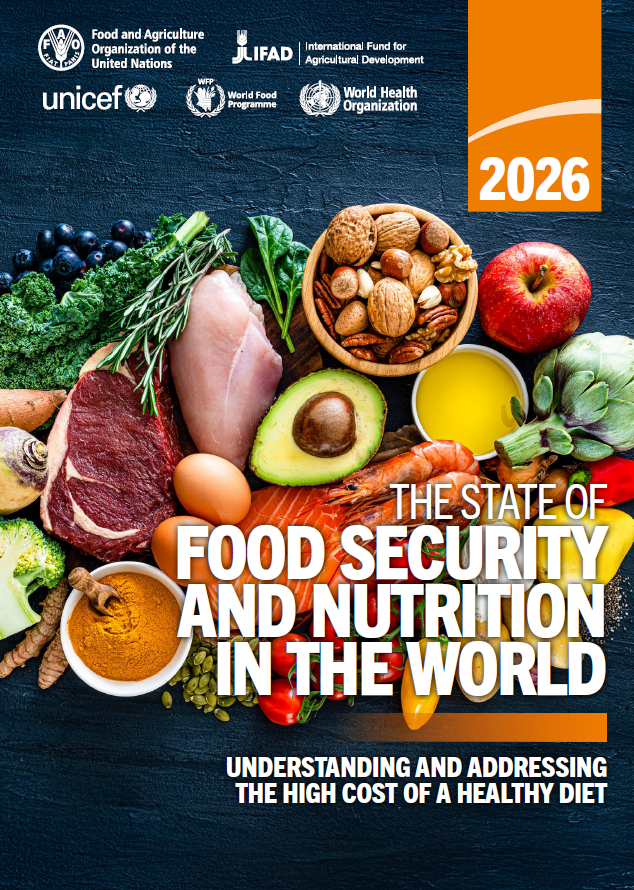
The latest State of Food Security and Nutrition in the World (SOFI) 2026 reports modest progress against hunger. An estimated 645 million people—7.8% of the global population—faced hunger in 2025, down from 659 million in 2024.
Yet progress remains deeply uneven. Africa now has the largest number of people facing hunger—309 million—and two-thirds of its population cannot afford a healthy diet. Globally, healthy diets remain beyond the reach of 2.69 billion people. FAO: SOFI 2026
For the Common Fund for Commodities (CFC), one finding is particularly important: activities beyond the farmgate account for 70–75% of what consumers pay for food, with processing, logistics and wholesale alone representing up to 40%.
This reveals a fundamental imbalance. Smallholders produce the food and carry many of the risks, yet much of the processing, value addition and income generation takes place farther along the chain—often far from producing communities. Farmers consequently receive too little of the final value, while consumers continue to face high prices for nutritious food.
Producing more food alone will not solve this problem. Investment must enable producing countries and communities to retain more value through:
- local processing and storage;
- cold chains and efficient logistics;
- stronger producer organizations and agribusinesses;
- better access to markets and appropriate finance; and
- greater production and distribution of fruits, vegetables, legumes and other nutrient-rich foods.
This is at the heart of CFC’s Humanizing Value Chains (HVC) approach: building value chains in which smallholders, workers and local enterprises receive a fairer share of the value they help create—while nutritious food becomes more accessible and affordable for consumers.
We invite governments, development partners, investors and responsible businesses to join us in moving value addition closer to the farmgate. That is how agrifood value chains can generate better incomes, stronger local economies and healthier diets—and turn progress against hunger into lasting transformation.