
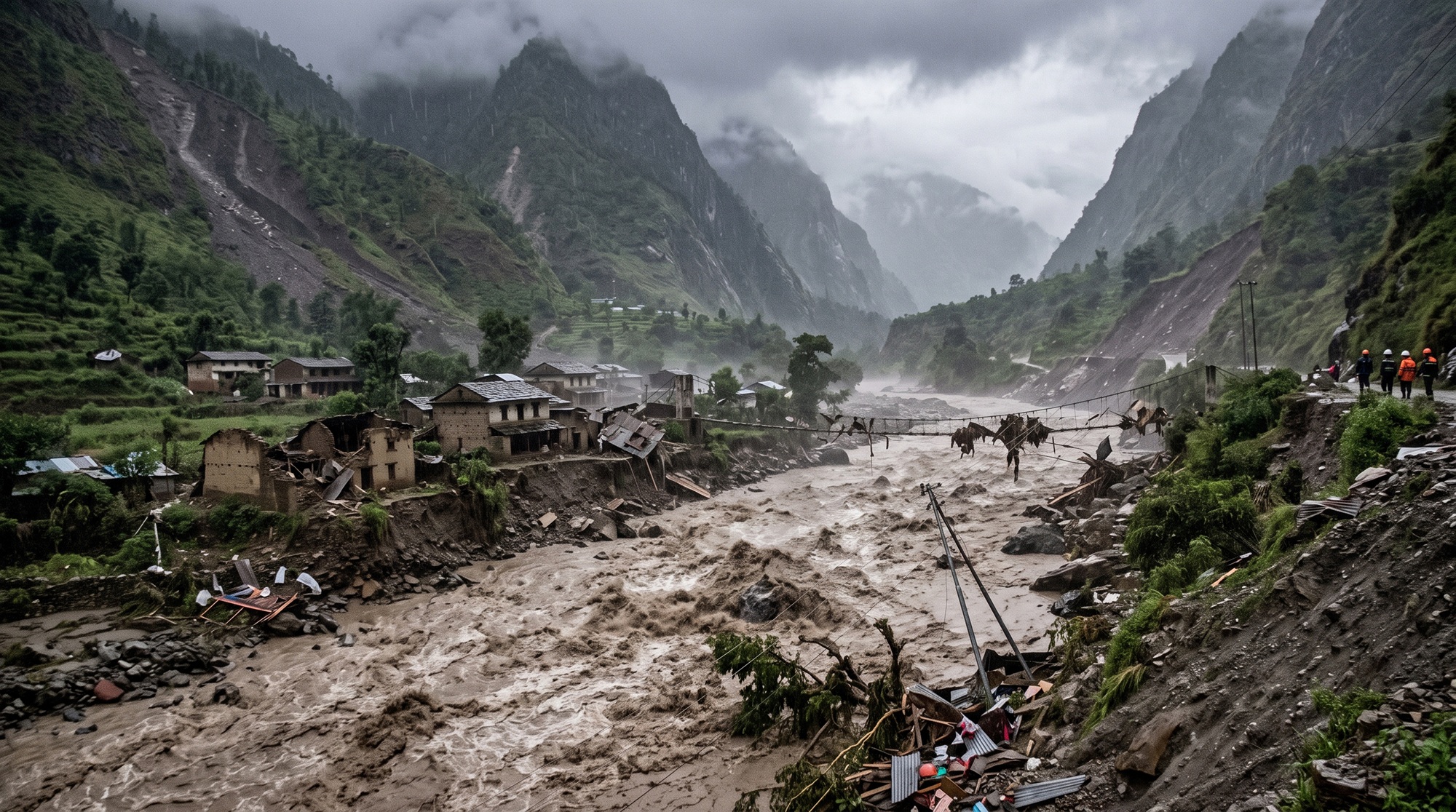
Nepal Floods: Solidarity Must Become Preparedness
The Common Fund for Commodities extends its deepest sympathy and solidarity to the Government and people of Nepal following the devastating floods and landslides that have affected communities across the country.
Our thoughts are with those who have lost loved ones, those who remain missing or displaced, and all whose homes, farms and livelihoods have been destroyed. We also pay tribute to the Government of Nepal for their calm and composed leadership to dispatch rescue workers, young volunteers, public officials and local communities responding with extraordinary courage.
We also remember the visitors and pilgrims of many nationalities who lost their lives or remain missing while visiting Nepal. They came from different countries, cultures and traditions, but they shared the same fate. Their loss gives this tragedy a profoundly universal character: while the disaster struck Nepal, its grief has crossed borders and entered homes around the world. We extend our heartfelt condolences to every affected nation and family.
But solidarity cannot end with words. The immediate priorities are rescue, relief and recovery. At the same time, Nepal urgently needs properly funded early-warning systems, continuous monitoring of unstable glaciers and landslide-dammed lakes, safe shelters, resilient infrastructure and reliable communications linking mountain monitoring stations with downstream communities.
Warnings must reach the last village, school, smallholder and family through multiple channels—including mobile alerts, sirens, radio and trusted local networks. Preparedness must also be locally led, drawing upon the knowledge of those who live with these risks every day.
This cannot be Nepal’s responsibility alone. The Himalayas and their rivers form a shared ecological system. China, India, Nepal, Bhutan and Bangladesh should explore an integrated Himalayan-to-delta monitoring and early-warning partnership, combining satellite information, artificial intelligence, river monitoring, shared data and community-based preparedness.
Technology, however, is valuable only when it enables people to act in time. Nepal also needs timely and accessible international climate finance—not distant promises or assistance delayed by complicated procedures. Recovery should rebuild homes, schools, farms, roads and livelihoods in ways that make vulnerable communities safer before the next disaster arrives. Young people and affected communities must have a meaningful voice in shaping these investments.
For smallholder farmers, a single disaster can destroy crops, erase years of income, disrupt commodity value chains and threaten food and nutrition security. Building climate-resilient agriculture and stronger local enterprises is therefore central to CFC’s mission and its commitment to Humanizing Value Chains.
Every proposed solution should be tested against a simple question: Will it reach and protect the people most exposed? Climate change may affect countries differently, but ultimately it confronts us all. Floodwaters do not recognise national borders, and life-saving knowledge should not be constrained by them.
Today, we stand with Nepal and with every nation mourning its citizens. Let us transform sympathy into cooperation, knowledge into preparedness and promises into action—as one humanity, united in protecting lives, livelihoods and our shared future.