CFC and Pakistan Discuss Affordable Finance and Commodity Value Creation
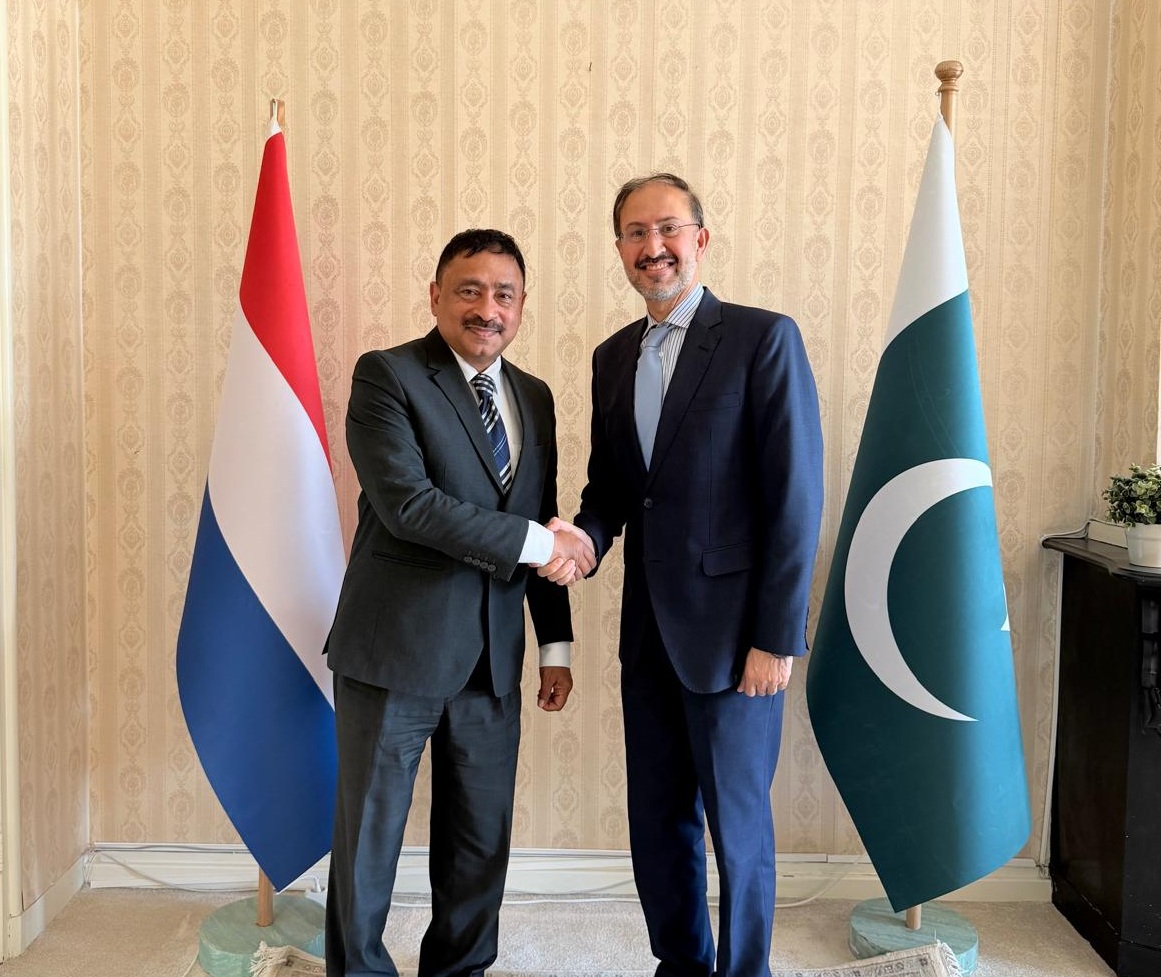
The Hague, 24 August 2026 – Ambassador Sheikh Mohammed Belal, Managing Director of the Common Fund for Commodities (CFC), paid a courtesy call on H.E. Mr. Syed Haider Shah, Ambassador of the Islamic Republic of Pakistan to the Kingdom of the Netherlands. Their discussions focused on the high cost of finance facing smallholders and commodity-based enterprises, Pakistan’s experience in developing globally competitive products, and opportunities for closer cooperation.
Ambassador Belal highlighted a fundamental imbalance in commodity value chains: those who produce commodities and create employment at origin often face the highest cost of capital.
In many developing markets, agricultural SMEs encounter double-digit borrowing rates, which can rise further once fees, collateral requirements, currency risks and short repayment periods are taken into account. Smallholders who cannot access formal banks may have to rely on traders, input suppliers or informal lenders at considerably higher effective costs. They may also be required to sell their harvest in advance or immediately after production, when prices are lowest, to repay their obligations.
Agriculture is particularly affected because farmers must pay for seeds, fertilizer, labour and equipment months before receiving income from their harvest. Commodity SMEs likewise need working capital to purchase, store, process and transport produce. Financing that is expensive, short-term or poorly matched to agricultural cycles can therefore absorb business margins, discourage investment and transfer additional risks to producers.
The financing imbalance that Ambassador Belal describes—“the enterprises closest to farmers are frequently the furthest from affordable finance”—comes at a monumental cost. When capital is this expensive, it destroys the value it is meant to create. UNCTAD quantifies this penalty at roughly $500 billion per year in excess interest payments alone. Redirecting this sum—equivalent to what developing countries would save if they borrowed at EU rates (sovereign, 2.2%)—is the single most direct path to building the inclusive, resilient commodity value chains the Ambassador envisions.
The meeting considered how a broader range of financing instruments—including blended finance, guarantees, patient capital, risk-sharing arrangements and asset-backed financing—could reduce financing costs and better align repayment obligations with the realities of commodity production.
Within this wider discussion, the two sides also considered the experience of Islamic finance. Its emphasis on identifiable productive assets, shared risks and closer links between financing and the real economy may offer useful lessons for designing responsible and potentially more cost-effective instruments. Such approaches could complement, rather than replace, the CFC’s existing financing instruments and could be relevant to enterprises across different countries and markets.
Ambassador Belal invited Pakistan to share its technical experience and best practices in developing financing models for agriculture, trade and SMEs. This knowledge could support the CFC’s efforts to identify practical instruments that lower barriers to investment while avoiding unsustainable debt burdens for small businesses and producers.
The discussion also highlighted Pakistan’s impressive productive capacity—from its globally sought-after rice and mangoes to cotton, textiles, surgical instruments and world-class sporting goods. Sialkot’s manufacturers have supplied official match balls for successive FIFA World Cups, including the 2026 tournament, demonstrating how local skills, innovation, quality assurance and value addition can connect producers with the world’s most demanding markets.
“Pakistan has valuable experience to share with the wider CFC membership,” Ambassador Belal said. “From agricultural exports that command a premium in international markets to the footballs used on the world’s greatest sporting stage, Pakistan demonstrates how skills, quality control, branding and entrepreneurship can transform locally produced goods into globally recognized products.”
Particular attention was given to Pakistan’s rice sector and its success in building consumer trust across the Middle East, Europe and beyond. Ambassador Belal emphasized that the objective should extend beyond increasing export volumes. Strengthening processing, certification, branding, logistics and market access can help Pakistan retain a greater share of the final value and ensure that farmers, workers and local enterprises benefit from export growth.
Ambassador Belal also briefed Ambassador Shah on the CFC’s Humanizing the Value Chains (HVC) initiative. HVC seeks to address imbalances in global commodity markets by ensuring that producers, workers, SMEs and local communities receive a fairer share of the value generated by the commodities they produce.
“Commodities are deeply woven into the lives and livelihoods of the people of Pakistan. From rice, cotton and mangoes to textiles, surgical instruments and sporting goods, these sectors sustain farmers, workers, entrepreneurs and communities while connecting Pakistan to markets around the world. We therefore see the CFC as an important platform for mutually beneficial cooperation—bringing together Pakistan’s experience and capabilities with the CFC’s financing expertise and global network to promote affordable finance, greater value addition and more inclusive commodity value chains,” Ambassador Shah said.
The two sides recognized considerable scope for continued cooperation. Pakistan’s knowledge of agricultural production, value addition, export development and innovative finance, together with the CFC’s global commodity mandate and financing experience, could benefit other commodity-dependent developing countries.
The meeting concluded with a shared interest in pursuing cooperation in three areas: expanding access to affordable and appropriately structured finance; exchanging best practices in commodity processing, quality assurance, branding and exports; and promoting more inclusive and resilient value chains.
About the Common Fund for Commodities (CFC)
The CFC is an UN-affiliated international financial institution based in Amsterdam, working in over 100 countries to support inclusive economic development through impact investing in commodity value chains.
For media inquiries, please contact:
[CFC Media Relations Team]
[Email: managing.director@common-fund.org]
[Phone: +31 20 575 4949]