CFC Publishes Study on the Implications of the EU Deforestation Regulation for Selected African Least Developed Countries[
New research examines the challenges and opportunities of EUDR compliance across commodity value chains, highlighting measures to support smallholders, strengthen traceability and safeguard market access.
Amsterdam, 23 November 2026 – The Common Fund for Commodities (CFC) has published a new study examining the implications of the European Union Deforestation Regulation (EUDR) for commodity value chains in six African Least Developed Countries (LDCs).
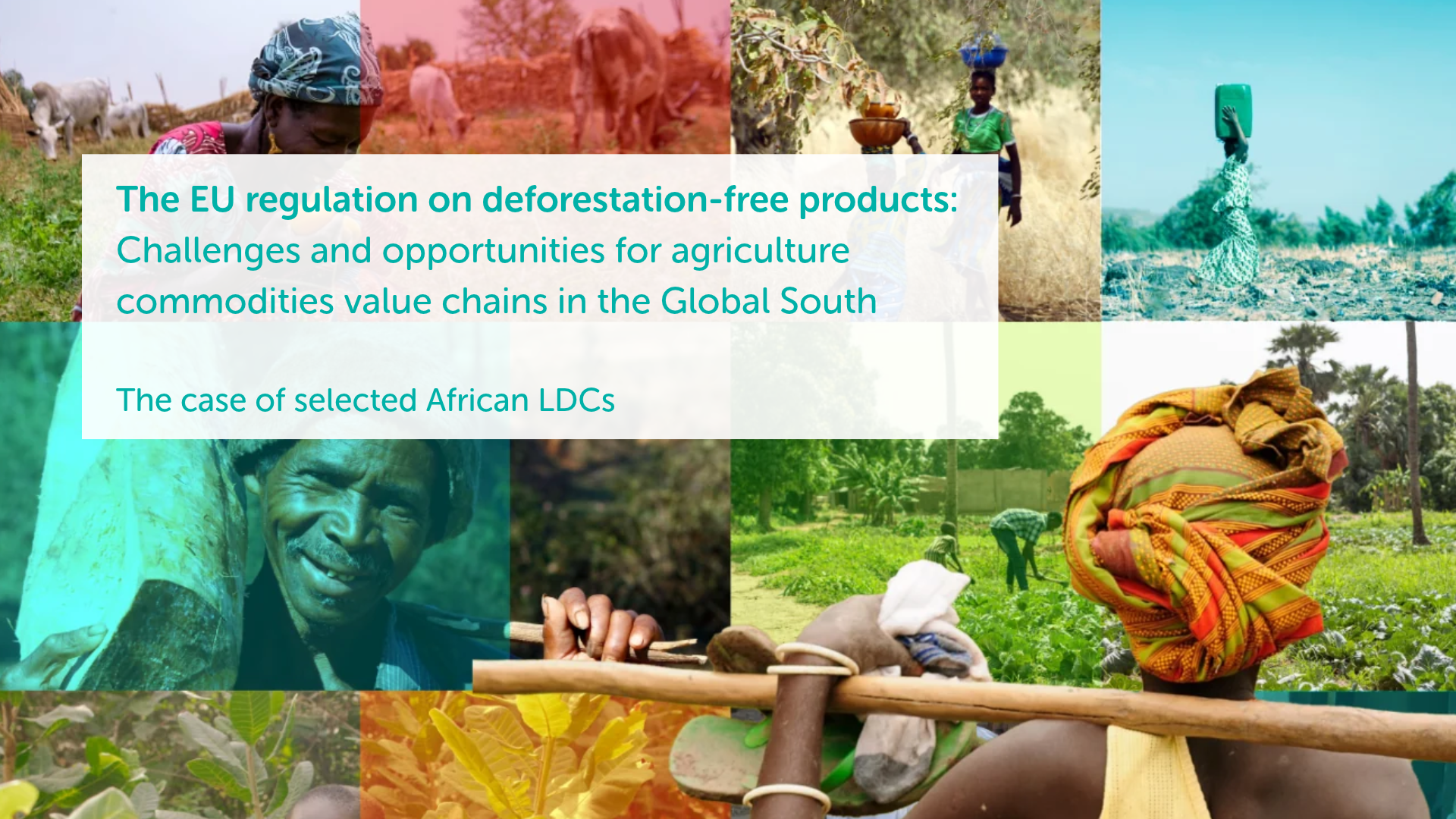
Entitled The EU Regulation on Deforestation-Free Products: Challenges and Opportunities for Agriculture Commodities Value Chains in the Global South – The Case of Selected African LDCs, the publication explores how the Regulation may affect producers, cooperatives, small and medium-sized enterprises (SMEs) and exporters in countries where agricultural commodities play a significant role in employment, export earnings and rural livelihoods.
The study covers coffee in Ethiopia and Uganda; timber and wood products in the Central African Republic; soya in Togo; cocoa and oil palm in Sierra Leone; and rubber, cocoa and oil palm in Liberia. Through these country and commodity case studies, it examines how differences in production systems, institutional capacity and dependence on export markets influence the ability of producers to meet evolving sustainability and traceability requirements.
Protecting forests while supporting smallholder livelihoods is an important part of the transition to more sustainable commodity value chains. The publication examines practical aspects of EUDR compliance, including traceability, data management and institutional capacity, and the challenges these may present for smallholders and businesses.
The study highlights the importance of technical assistance, stronger national coordination and access to appropriate financing to help producers adapt to evolving sustainability requirements and maintain access to international markets. It also identifies opportunities to improve production practices, strengthen competitiveness and create greater value within producing countries.
Through this initiative, the CFC continues to advance its mandate as an international financial institution serving commodity-dependent developing countries. By examining the implications of evolving sustainability requirements for producers and enterprises, the Fund seeks to identify where development finance, technical assistance and international partnerships can help make the transition to more sustainable trade inclusive and economically viable.
The CFC emphasises that smallholders must be able to participate in deforestation-free value chains on fair terms, without bearing a disproportionate share of the costs associated with meeting sustainability requirements. Buyers, public authorities and development partners should contribute to ensuring that farmers have access to the finance, information and practical support needed to maintain market access and earn a decent living. This is particularly important to ensure that the transition towards more sustainable trade does not leave vulnerable producers behind.
The publication is intended as a resource for policymakers, international organisations, development partners and stakeholders across commodity value chains. The CFC welcomes further dialogue and practical cooperation on its findings and recommendations.
About the Common Fund for Commodities
The Common Fund for Commodities (CFC) is an autonomous intergovernmental financial institution established within the framework of the United Nations. With 101 Member States and nine institutional members, the CFC supports commodity-dependent developing countries through investments in sustainable agricultural enterprises, inclusive value chains and innovative development financing.
For more information: www.common-fund.org